Pneumatic Y Type For Chemical Plant

  • home  /
  • pneumatic y type for chemical plant

Pneumatic Y Type Control Valve

Y Type Valve for Pharmaceuticals has its own precincts as it deals with the substances that may abrade and corrode the valves. Our valves are highly corrosion resistant and offer consistent functionality.

We are also the leading Pneumatic Y Type valve exporter as they are highly demanded in the countries across the world such as Oman, Qatar, Indonesia, Philippines and South Africa. Quality and affordability are the factors that make our valves highly chosen internationally.

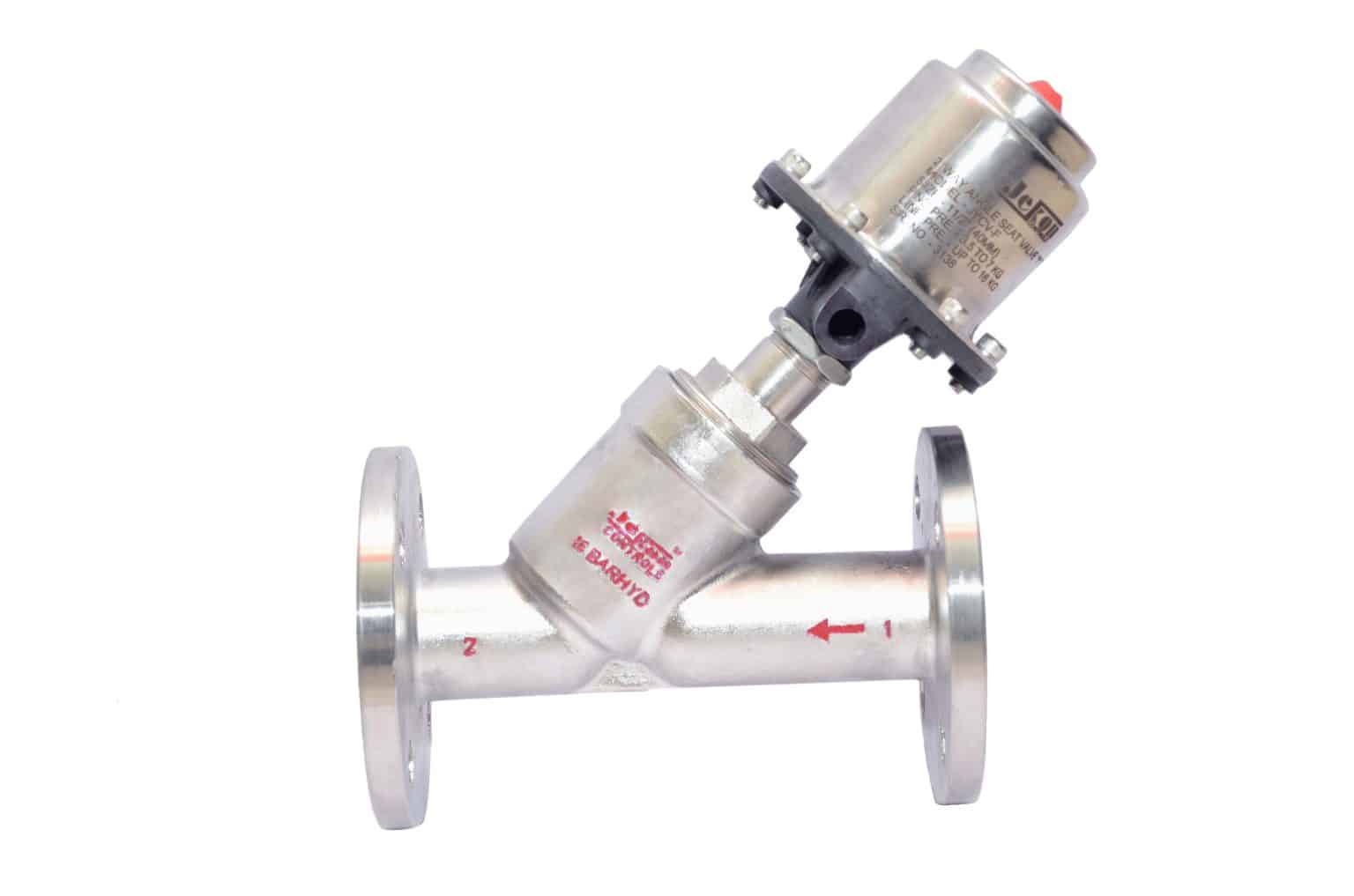
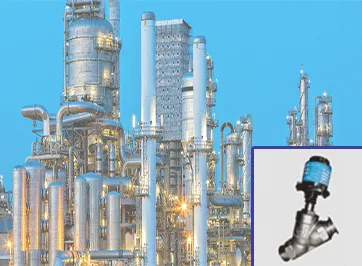
Chemical processing plants operate under demanding conditions where safety, reliability, and corrosion resistance are of paramount importance. Jekon Controls manufactures specialized Pneumatic Y Type Valves that are engineered to withstand aggressive chemical media, including dilute acids, solvents, and corrosive solutions. The Y-body design minimizes flow resistance and prevents the accumulation of chemical residue, ensuring a clean and safe operational line.

Our chemical plant valves are constructed using premium SS 316L, which provides excellent resistance to pitting and corrosion, combined with high-grade PTFE seals to guarantee zero leakage. By integrating reliable pneumatic actuators, we enable safe, automated flow control that can be easily managed via centralized PLC systems. These valves are widely exported to international destinations like Oman, Qatar, and South Africa, meeting rigorous quality benchmarks.
FAQs of Pneumatic Y Type Valve for Chemical Plant

1. Why are Y Type valves preferred in chemical plants?

Y Type valves are preferred in chemical plants due to their corrosion-resistant construction, ability to handle aggressive chemicals, high pressure and temperature ratings, and reliable pneumatic actuation for automated process control.

2. What materials are used for chemical-resistant valves?

Chemical plant valves use SS 316L body material with PTFE, Viton (FKM), or EPDM seals for resistance to acids, alkalis, solvents, and other corrosive chemical media commonly found in chemical processing.

3. What chemical media can Y Type valves handle?

Y Type valves can handle dilute acids, alkalis, alcohols, solvents, steam, hot water, compressed air, and various chemical process fluids. The material selection depends on the specific chemical compatibility requirements.

4. How does pneumatic actuation benefit chemical plant operations?

Pneumatic actuation offers intrinsically safe operation in hazardous areas (ATEX zones), fast and reliable switching, no electrical risk in chemical atmospheres, and easy integration with PLC/DCS process automation systems.

5. What certifications are required for chemical plant valves?

Chemical plant valves should meet relevant standards like ASME, EN, DIN, and optionally carry ATEX certification for use in explosive atmospheres. Material traceability documentation is also commonly required.

6. What support does Jekon Controls provide for chemical plant applications?

Jekon Controls provides application engineering support, proper valve selection based on chemical compatibility, technical datasheets, and after-sales service to ensure optimal performance in chemical processing environments.